Discover the beauty of historical and cultural sites of Patna
Patna, the capital of Bihar, is a city that wears its antiquity with quiet dignity. The historical and cultural sites of Patna are not just remnants of bygone eras. They are firstly living testaments to the city's ever-evolving identity. Once known as Pataliputra, it was the royal seat of the Mauryan Empire. It is a thriving center of learning, commerce, and spirituality. Above all, its roots reach as far back as the 5th century BCE. Patna is one of the oldest continuously inhabited cities in the world. But what further makes it truly remarkable is how seamlessly its past blends with the present. Each site tells a story-of empires, revolutions, saints, and citizens. That further make the city a must-visit destination for heritage travelers and curious minds alike.
Golghar: A Colonial Legacy with a View
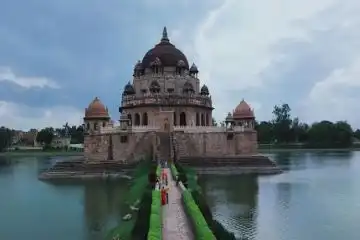
Golghar, the iconic granary built in 1786 by Captain John Garstin, continues to dominate the city's skyline. Constructed in response to a devastating famine, this beehive-shaped structure once stored up to 140000 tons of grain. Although it was never filled to capacity due to a design flaw, Golghar stands as a lasting symbol of British architectural ingenuity. Its 145-step spiral staircase firstly offers more than a cardio workout. That further leads to breathtaking views of the city and the Ganges River. However, exploring the famous spiritual places of Bodh Gaya is a treat for spiritual lovers. Whether you visit at sunrise or dusk, Golghar is the perfect spot for photographers and history lovers alike.
Patna Museum: Where the Past Comes Alive
Also known as Jadu Ghar, the Patna Museum is a century-old institution. It firstly showcases Bihar's rich and diverse history. Walking through its galleries is like turning the pages of a historical epic. From Mauryan-era sculptures to Mughal miniatures, each artifact is a window into the past. Particularly captivating is the Didarganj Yakshi, an exquisitely carved sandstone statue. That further dates back to the 3rd century BCE. All these makes it one of the fascinating historical and cultural sites of Patna to explore. The museum also houses sacred relics of Lord Buddha, medieval weapons, and a fossil of a tree. That is estimated to be over 200 million years old. It's an essential stop for those who want to understand how Patna's legacy helped shape the subcontinent's cultural and spiritual ethos.
Kumhrar: Stepping into Ancient Pataliputra
The excavated ruins at Kumhrar offer rare glimpse into the urban planning and architectural brilliance of ancient India. Believed to be the administrative hub of the Mauryan dynasty, the site features remains of an 80-pillared hall. That likely served as a royal court or council chamber. Archaeologists have also uncovered residential complexes, drainage systems, and a Buddhist monastery. All are pointing to a highly organized and sophisticated civilization. Standing among these remnants, you can almost hear the echoes of ancient debates, rituals, and courtly ceremonies. However, that's a powerful reminder of Patna's historic significance as a center of governance and intellect.
Takht Sri Patna Sahib: The Soul of Sikh Heritage
A spiritual beacon for Sikhs around the world, Takht Sri Patna Sahib. It marks the birthplace of Guru Gobind Singh, the tenth Sikh Guru. This was constructed by Maharaja Ranjit Singh in the 18th century. The gurdwara is a stunning display of white marble architecture and religious artistry. Inside, you'll find preserved personal belongings of Guru Gobind Singh, including his weapons and handwritten scriptures. The langar (community kitchen) offers free meals to visitors. Above all, it emphases the Sikh values of equality and service. The spiritual ambiance here is both calming and empowering. That meanwhile draws thousands of pilgrims and tourists each year.
Agam Kuan: The Well of Secrets
Agam Kuan, or the “unfathomable well”, is one of the oldest surviving archaeological sites in Patna. However, it is one of the best historical and cultural sites of Patna. Believed to have been part of Emperor Ashoka's early reign, this mysterious well is surrounded by legends. Some say it was a site for judicial punishment, while others claim it has healing powers. With its deep, dark waters and circular brick structure, Agam Kuan has an almost hypnotic quality. Visitors often leave coins or make wishes, making it a unique blend of folklore and archaeology. Whether fact or fiction, the stories associated with the well only add to its allure.
Bihar Museum: A New-Age Heritage Experience
Opened in 2015, the Bihar Museum is a state-of-the-art facility. That brings history to life through digital displays, dioramas, and interactive exhibits. Designed by Japanese and Indian architects, the museum's layout is both artistic and functional. Highlights include the Children's Gallery, the Bihari Diaspora section, and detailed exhibits on Bihar's freedom fighters and social reformers. The museum's unique approach further appeals to all age groups and backgrounds. It's an excellent example of how the historical and cultural sites of Patna are evolving. So that, it can meet the educational and aesthetic needs of the 21st-century visitor.
Mahavir Mandir: A Temple of Devotion and Service
Mahavir Mandir, located near Patna Junction, is not just a religious site-it's a spiritual experience. Dedicated to Lord Hanuman, this temple sees footfall in the millions annually. That happens particularly during festivals like Ram Navami and Hanuman Jayanti. What further sets it apart is its charitable wing, the Mahavir Mandir Trust. That meanwhile runs hospitals, blood banks, and disaster relief operations. The temple's bustling energy, fragrant offerings, and constant chanting make it a sensory delight. It's a place where faith and service intersect, offering both solace and social support to the community.
Pathar Ki Masjid: A Stone-Carved Masterpiece
Pathar Ki Masjid, or the “Stone Mosque”, was built in 1621. It firstly remains one of the oldest surviving mosques in Patna. Located along the Ganges, its pristine stone structure and arched façade represent classic Mughal architectural aesthetics. Despite being over 400 years old, the mosque continues to be a functional place of worship. It puts it into the list of historical and cultural sites of Patna to explore further. Its historical relevance lies not only in its age but also in its testimony to the cultural syncretism of Patna. It's a city where Hindu temples, Sikh gurdwaras, and Islamic mosques co-exist harmoniously.
Gandhi Maidan: The Ground of Revolutions
Gandhi Maidan is a massive public ground that has played a central role in India's political history. It goes from Mahatma Gandhi's rallies during the independence movement to modern-day protests and cultural festivals. In short, this open space is the beating heart of civic life in Patna. Surrounded by historic landmarks and modern buildings, it's a place where the city's past and present merge. There is a tall statue of Mahatma Gandhi at the center. That meanwhile serves as a constant reminder of the values of justice, freedom, and non-violence.
Srikrishna Science Centre: Bridging the Past and Future
Named after Bihar's first Chief Minister, the Srikrishna Science Centre is a hub of knowledge and innovation. With thematic galleries on physics, biology, and astronomy, it's especially popular among school groups and families. The 3D science shows, planetarium, and interactive experiments firstly offer fun learning experiences. It is not a historical and cultural sites of Patna per se. But, it represents the cultural ambition of Patna to nurture future generations of thinkers, inventors, and explorers. It's a wonderful place to meanwhile experience how curiosity and creativity are encouraged within the city.
Khuda Bakhsh Oriental Library: The Keeper of Knowledge
Tucked away on Ashok Rajpath, the Khuda Bakhsh Oriental Library is a lesser-known gem. That firstly deserves far more attention. With over 20000 manuscripts and 2-3 lakh printed books, the library is a sanctuary for scholars and history lovers. Many manuscripts are handwritten and richly illustrated, offering rare glimpses into Islamic art and literature. The library was founded in 1891 by Khuda Bakhsh Khan, who donated his personal collection for public use. Today, it remains a valuable academic resource. That's preserving centuries of intellectual legacy in a world increasingly dominated by digital media.
Conclusion: A City Where Every Corner Tells a Story
Patna is not only a city; but it's also a living, breathing museum of Indian civilization. The historical and cultural sites of Patna are diverse, profound, and deeply rooted in time. It goes from ancient halls where emperors once held court to modern museums that embrace digital storytelling. The city further offers a spectrum of experiences. Patna teaches us that history is not confined to textbooks or monuments. It further lives in conversations, traditions, and daily rituals. You may be standing before a 2000-year-old sculpture or sipping chai near Gandhi Maidan. Anyhow, you are engaging with a rich heritage that continues to shape the soul of Bihar. Therefore, pack your bags and bring your curiosity. Then, prepare to be inspired by one of India's most fascinating cultural capitals.