Explore top forts, palaces and other historical sites of Bikaner
Tucked away in the northwestern deserts of Rajasthan, Bikaner is a city that blends sand dunes with grandeur, and history with hospitality. The historical sites of Bikaner offer a gateway into a time when kings ruled and artisans thrived. No matter that you are an explorer of ancient tales or a lover of heritage architecture. It is a treasure chest of royal legacies, architectural wonders, and cultural depth. Each monument in this city carries whispers of courage, devotion, artistry, and opulence. Let's journey through the forts, palaces, and spiritual landmarks that define Bikaner's historic identity.
1. Junagarh Fort - The Unyielding Fortress
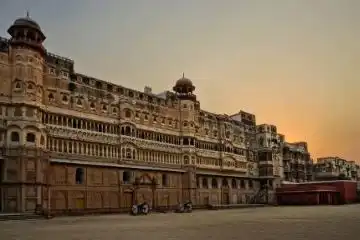
Among Bikaner's crown jewels, Junagarh Fort is a marvel of military architecture and aesthetic elegance. Unlike many forts in Rajasthan, it was constructed on the plains in 1589 and stands unconquered to this day. Extend your trip to explore the top attractions to explore in Jodhpur in Rajasthan. This fort was built by Raja Rai Singh, a general in Emperor Akbar's army. The fort boasts over 37 palaces, temples, and pavilions inside its complex.
Visitors can explore the Anup Mahal, adorned with gold leaf work and mirror embellishments, and the Badal Mahal. There, blue cloud motifs on the ceiling mimic monsoon skies. The fort standing tall among the historical sites of Bikaner also features a unique blend of Mughal, Gujarati, and Rajput styles. That reflect centuries of royal evolution. Don't miss the armory section, showcasing swords, daggers, and firearms used in historical battles.
2. Lalgarh Palace - A Royal Fusion
Built between 1902 and 1926 by Maharaja Ganga Singh, Lalgarh Palace stands as an architectural masterpiece. Its red sandstone structure blends Mughal, Rajput, and European elements, making it one of Rajasthan's most unique palaces. The interiors are equally mesmerizing, with latticework balconies, intricate stone carvings, and sprawling courtyards.
Part of the palace has been converted into a royal hotel. That offers guests the chance to experience regal living. Another portion houses the Shri Sadul Museum, which features royal memorabilia, family portraits, and vintage furniture. That speak of Bikaner's illustrious lineage.
3. Gajner Palace - The Desert Oasis
On the edge of Gajner Lake, about 30 kilometers from Bikaner, lies Gajner Palace. Gajner Palace is one of the main historical sites of Bikaner to visit. This palace was once a favorite hunting retreat of the Bikaner royals. The palace, now a heritage hotel, is surrounded by a forest reserve. That is teeming with wildlife including black bucks and migratory birds.
The palace's architecture, with its colonnaded corridors, courtyards, and verdant gardens, offers a tranquil escape from the arid surroundings. Boating on the lake during sunset is a magical experience. During that, reflections of the palace dance on the water, amplifying its timeless beauty.
4. Rampuria Havelis - Merchant Mansions of Grandeur
Often referred to as the “pride of Bikaner”, the Rampuria Havelis are a cluster of lavish 15th-century mansions. That were built by the city's wealthiest merchants. Their facades are richly adorned with floral carvings, jharokhas (overhanging balconies), and sandstone motifs.
These havelis, primarily constructed in deep red Dulmera stone, echo a blend of Rajasthani, Mughal, and Victorian influences. While most are private residences, a walk down Rampuria Street is like stepping into a living museum. They provide a perfect backdrop for photographers and architecture enthusiasts seeking authentic cultural heritage.
5. Karni Mata Temple - A Divine Mystery
Located in Deshnok, the Karni Mata Temple is one of the most intriguing religious sites in India. Revered as the home of thousands of holy rats, known as kabbas, the temple draws pilgrims and curious tourists alike.
The belief is that the rats are reincarnated followers of Karni Mata. It is a 14th-century sage believed to be an incarnation of Goddess Durga. The temple itself is a stunning structure made of white marble with silver gates and intricately carved ceilings. Spotting the rare white rat among the thousands is considered highly auspicious.
6. Bhandasar Jain Temple - A Spiritual Gem
This 15th-century Jain temple, dedicated to the fifth Tirthankara, Sumatinatha, is an architectural and spiritual gem. Built with red and yellow sandstone, Bhandasar Jain Temple is known for its exquisite frescoes and geometric mirror work.
What sets this temple apart is the legend that its foundation was mixed with clarified butter (ghee) instead of water. That symbolizes purity and devotion. The temple's three-storied structure allows visitors to ascend gradually. Each level reveale more intricate artwork and deeper spiritual resonance.
7. Devi Kund Sagar - Memorials of the Maharajas
A lesser-known among historical sites of Bikaner, Devi Kund Sagar is a royal cremation ground for the Bikaner family. It features chhatris (cenotaphs) built in red and white marble, dedicated to kings and queens of the Rathore dynasty.
Each cenotaph is a work of art, engraved with depictions of court scenes, battles, and mythological themes. The location, stands out with its peaceful ambiance and reflection pools. That provides a stark yet beautiful contrast to the bustling streets of Bikaner.
8. Prachina Museum - The Culture Keeper
Nestled inside the Junagarh Fort complex, Prachina Museum is one of the historical sites of Bikaner. It often overlooked but is a must-visit for cultural enthusiasts. Founded by Princess Siddhi Kumari, the museum preserves rare heirlooms and everyday items used by Bikaner's royals.
Highlights include ceremonial costumes, miniature paintings, handwoven carpets, and traditional utensils. One section is dedicated to Bikaner's vibrant art of Usta painting, a technique involving raised gold patterns. This museum provides a more intimate look into how the royals lived beyond the grand façades of palaces.
9. Ganga Singh Museum - Rajasthan's Historical Repository
Housed in the Public Park, Ganga Singh Museum is one of Rajasthan's richest repositories of archaeological and artistic heritage. Named after Maharaja Ganga Singh, the museum showcases Harappan artifacts, stone tools, terracotta figures, coins, and sculptures. That comes from the Kushan and Gupta periods.
For ancient history lovers, this museum provides context to the region's evolution well before the rise of the Rajput dynasties. The beautifully labeled galleries make it a great educational experience for families and students alike.
10. Kodamdesar Temple - The Open-Air Shrine
Located about 24 km from Bikaner, Kodamdesar Temple is unique in that it has no formal idol or sanctum. Instead, devotees worship a simple image under the open sky. It is believed that Maharaja Rao Bika prayed here before founding the city of Bikaner.
During the annual Kodamdesar Mela, thousands of devotees gather for rituals, folk music, and traditional performances. The temple's raw spiritual atmosphere and rural backdrop offer a deep dive into Bikaner's folk traditions and grassroots beliefs.
11. Bikaji Ki Tekri - The Birthplace of Bikaner
Bikaji Ki Tekri, or the mound of Rao Bika, marks the original site where Bikaner's founder first settled. Though now in ruins, the site stands as a tribute to the city's origins in the 15th century.
The remnants of early fortifications and structures provide a historic frame. That helps you to understand how Bikaner evolved from a desert outpost to a princely state. For history lovers, this quiet corner offers a humbling look at the roots of grandeur.
12. Shiv Bari Temple - Sacred and Strong
A perfect example of fortified devotion, the Shiv Bari Temple is encased in strong sandstone walls. It was built in the late 19th century. It houses a commanding black marble Shiva lingam and a Nandi bull sculpture carved from a single stone.
The temple is active with regular rituals and draws devotees especially during Mahashivratri. It offers a combination of military-style fortification and religious sanctity. That makes it an intriguing visit for those interested in the intersection of power and faith.
Final Thoughts: Discovering Bikaner's Historic Soul
The historical sites of Bikaner offer more than just pretty facades-they tell stories of valor, devotion, innovation, and resilience. From impenetrable forts and royal retreats to mystical temples and age-old museums, Bikaner's heritage is vast and multifaceted.
Exploring these historical sites of Bikaner is like reading a living history book. In that, each page is a monument, each chapter a legend. You may be a culture enthusiast, architecture lover, or curious traveler. Let Bikaner guide you through Rajasthan's golden pages of the past-one majestic site at a time.